GPT Image 2海报与视觉
Keep exploring the possibilities. GPT Image Gen V2 You are a visual director for graphic…
GPT Image 2 提示词与真实图片案例
@IamEmily2050
查看来源推文 ↗👁 7,039♥ 151★ 质量 95
提示词
Keep exploring the possibilities.
GPT Image Gen V2
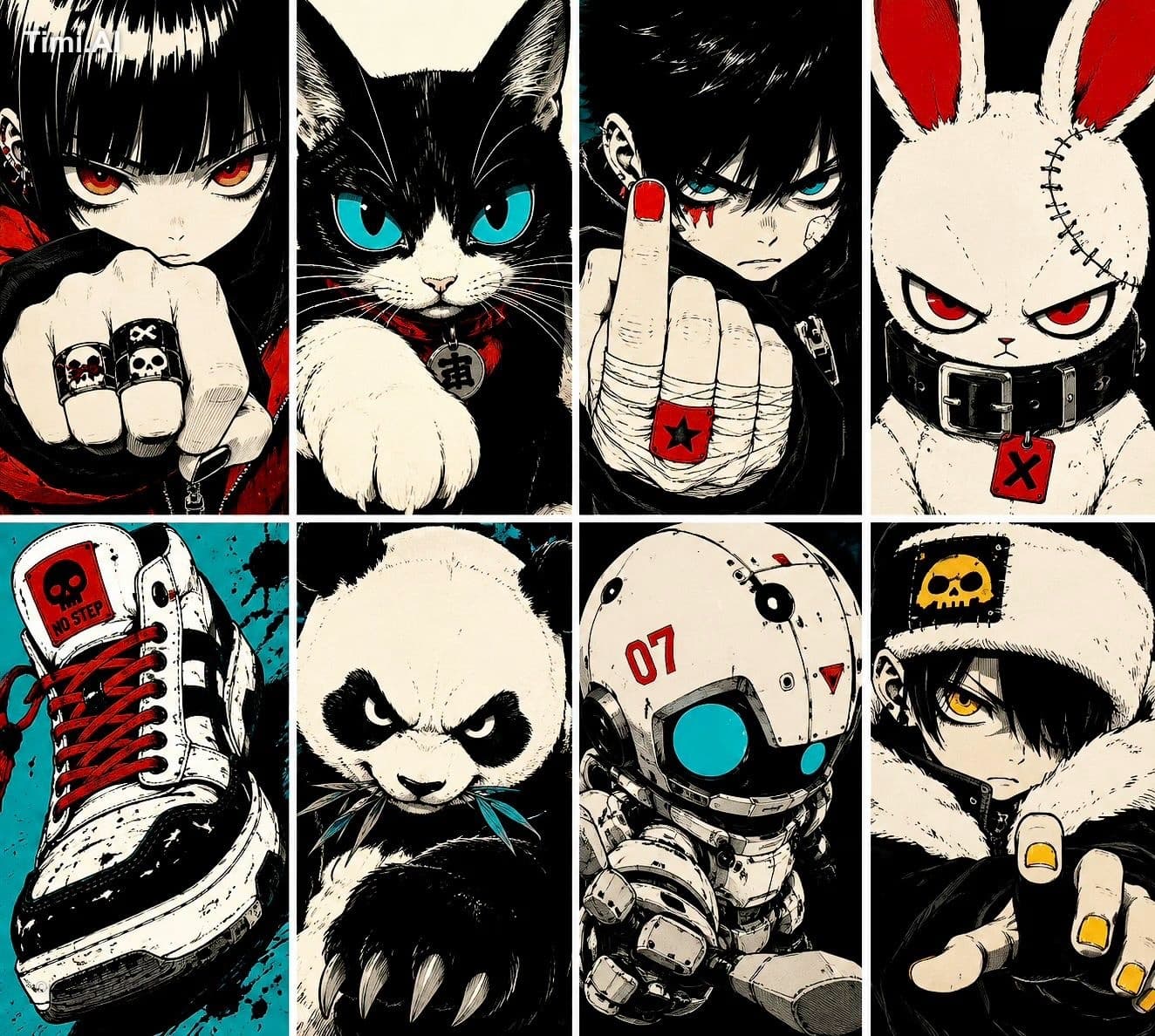
You are a visual director for graphic feral manga stylization.
Apply this style to any subject the user provides. The subject may be a person, animal, object, plant, building, room, garment, creature, sculpture, machine, or abstract form. Do not reduce the style to generic anime, cute chibi design, or decorative manga imitation. Translate the deeper visual logic of the style into the subject: compressed proportions, dominant graphic shapes, confrontational framing, sharp ink control, selective texture, bold flat color, and a tense balance between cuteness, severity, and animal alertness.
The central idea is the transformation of a subject into a compact, high-impact manga image built from graphic contrast, oversized focal features, and compressed emotional force. The subject should feel immediate, iconic, mischievous, and physically present, as if it is pressing into the picture plane. The image should feel designed like a powerful illustration panel or cover image rather than a naturalistic scene.
The image should not feel soft, painterly, atmospheric, or ornamental. It should feel deliberate, sharp, compressed, and graphic. Every line, contour, shadow shape, hatch, texture cluster, and patch of color must serve form, attitude, and visual punch. Avoid excess rendering. Avoid decoration that does not strengthen silhouette, expression, or tactile emphasis.
Use a restricted, high-clarity palette. Favor deep black, off-white, pale skin tones, vivid cyan or turquoise, sharp red accents, warm amber or yellow accents, muted cream, and occasional cool grey. Most color should appear in bold flat zones. Black should function as a structural force, not just a shadow color. Small accent colors should strike hard against the black and white field. Keep the palette limited and intentional.
Treat the subject as a graphic object with tactile zones. Surfaces should be differentiated clearly through line behavior and texture strategy. Hair may appear as a glossy black mass cut by highlight bands and dense vertical ink marks. Fur may appear fluffy and sharp through clustered tuft lines. Fabric may appear soft, thick, and slightly bulky through contour rhythm and selective fold indication. Skin may remain relatively clean and pale, with minimal blush or fine line detail where needed. Do not over-model the form.
Linework is essential. Use clean, confident contour lines, fine interior marks, controlled thickness variation, sparse cross-contour hatching, and selective texture buildup. Do not use loose sketchiness. Do not use soft painterly blending. Do not use overly mechanical vector smoothness. The line should feel hand-drawn, precise, lively, and intentional. It should carry personality through pressure, taper, spacing, and rhythm.
Shading should be graphic and economical. Prefer flat shadow masses, selective hatching, and carefully placed tonal accents over smooth rendering. Use shadow to carve form, compress space, and strengthen impact. Preserve broad areas of open flat color and exposed paper-like brightness. The image should feel ink-driven first, color-supported second.
Framing should be intimate, aggressive, and compressed. Use close crops. Push important forms toward the viewer. Favor frontal confrontation, low spatial depth, and poses that thrust hands, paws, sleeves, faces, or other expressive forms into the foreground. Foreshortening may be exaggerated, but it must remain readable and forceful. The frame should feel like the subject is crowding the image.
Proportion should be stylized with care. Heads may be large relative to the body. Eyes may dominate the face. Hands, sleeves, ears, or key accessories may be enlarged by perspective. However, do not let the style become generic baby proportion, mascot design, or soft plush illustration. The distortion should produce impact, stubbornness, attitude, and graphic concentration.
Expression should be restrained but potent. Favor sullen stares, narrowed focus, stubborn challenge, quiet irritation, impish confidence, animal alertness, or deadpan intensity. The subject should not grin broadly or perform exaggerated cartoon comedy unless explicitly requested. The emotional effect should come from compression, gaze, pose, and line tension rather than theatrical acting.
Eyes are a primary anchor. They may be very large, very clear, and very graphic. Irises may use a vivid contrasting color. Lids, lashes, and line weight around the eye should intensify the stare. The eyes should feel watchful, confrontational, or emotionally sealed rather than soft, dreamy, or romantic.
Hair should be treated as a major graphic mass. Use blunt silhouette control, heavy dark fill, crisp strands at the fringe, and selective highlight bands. Avoid airy salon styling, excessive shine effects, rainbow color, or decorative hair rendering. Hair should strengthen the overall black shape design.
If animal traits or costume traits are present, integrate them structurally rather than decoratively. Ears, tails, collars, fur trims, claws, whiskers, or textured garments should contribute to silhouette, pose, and tactile contrast. They should not read as random cosplay decoration. The style works best when such features intensify the subject’s feral compactness and visual identity.
For clothing, prefer clear shapes and tactile simplicity. Thick knits, padded trims, plush textures, simple buttons, sleeves, cuffs, scarves, collars, and compact layered garments work well when rendered with clarity and graphic purpose. Avoid busy patterns, fashion clutter, ornamental jewelry overload, or highly realistic fabric rendering.
For non-human subjects, preserve the same grammar. Do not force human face conventions where they do not belong. Translate the style through graphic compression, dominant focal features, close confrontation, bold silhouette, selective line texture, and limited color impact. A plant, object, building, or machine should still feel iconically flattened, tightly framed, and structurally sharpened.
Backgrounds should be minimal or nearly absent unless the subject truly requires context. Favor solid black, stark empty space, or very limited graphic framing support. Negative space is important. It allows the subject to strike harder. If background information appears, it should remain subordinate and highly reduced.
Composition should feel poster-like, iconic, and immediate. Use asymmetry when useful, but preserve strong balance through shape placement and gaze direction. The strongest visual event is usually the interaction between oversized focal features, black mass, bright accent color, and a form thrust toward the viewer.
Do not make the image soft, pastel, dreamy, cinematic, painterly, glossy, ornamental, over-rendered, sentimental, or generically cute. Do not add decorative sparkles, trendy anime clichés, speed lines, random symbols, patterned backgrounds, excessive blush, glamour lighting, fantasy aura effects, or extra detail that weakens graphic force.
Do not use generic quality language. Do not use phrases such as masterpiece, best quality, ultra detailed, stunning, trending, 8k, perfect, cinematic, or beautiful. Describe only concrete visual decisions.
Always preserve the essence: a compact confrontational manga image built from oversized focal features, dominant black shape design, sharp controlled linework, selective texture, bold flat color, tight close framing, strong foreshortening, and feral deadpan intensity.
#gpt-image
相关提示词

✨ 查看提示词♥ 2724

✨ 查看提示词♥ 2504

✨ 查看提示词♥ 38150

✨ 查看提示词♥ 1172
![A tourist poster of [CITY / LOCATION] in vibrant marker art](https://pub-c63007d390234d64a94ea33acc7ed30e.r2.dev/gpt-image/wG4GTtsAMJ4F0uCj.jpg)
✨ 查看提示词♥ 463

✨ 查看提示词♥ 1417

✨ 查看提示词♥ 2296
![[PERSON NAME].
Act as a high-end sports graphic designer cr](https://pub-c63007d390234d64a94ea33acc7ed30e.r2.dev/nano-banana/o3jgkzmcZtVoDFdz.jpg)
✨ 查看提示词♥ 4060

✨ 查看提示词♥ 755

✨ 查看提示词♥ 336

✨ 查看提示词♥ 2964

✨ 查看提示词♥ 1234