
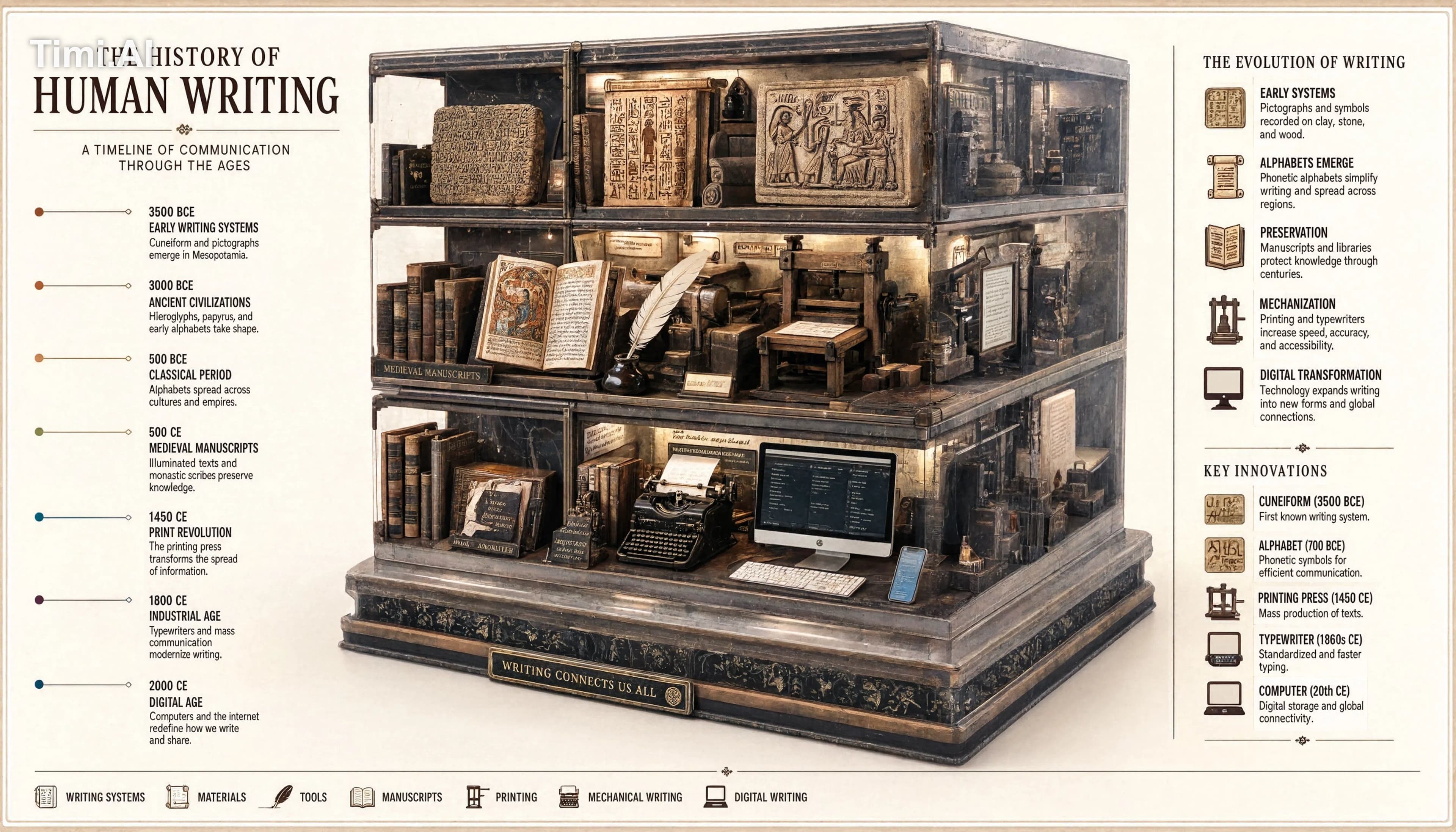
unknownInfographic
Style = { <chronology_cube_archive> MEDIUM: Dense historical object-cube diorama fused w…
unknown prompt and image example

@Gdgtify
View source post ↗👁 400♥ 13★ quality 90
PROMPTTranslation
Style = { <chronology_cube_archive> MEDIUM: Dense historical object-cube diorama fused with museum infographic design and collectible timeline sculpture. MATERIAL: Miniature artifacts, carved figures, architectural fragments, tools, machines, documents, textiles, vehicles, screens, relics, and symbolic objects packed into a cube-like display. SURFACE: Realistic miniature materials with museum-clean lighting, subtle dust, aged patina, tiny printed labels, glass-case clarity, and tactile object density. FORM: The subject becomes a compact cube, block, or archive volume filled with layered objects that represent eras, memories, stages, systems, or transformations. COLOR: Era-sensitive palette inferred from the subject, balanced with cream background, warm museum neutrals, dark archival shadows, metallic accents, and selective modern color highlights. LIGHTING: Clean gallery lighting with soft shadows, high detail visibility, and crisp object separation. COMPOSITION: Central cubic archive object with explanatory side text, date-like hierarchy, bullet-list logic, and curated museum-poster spacing. MOOD: Encyclopedic, historical, dense, tactile, intelligent, collectible, and highly inspectable. </chronology_cube_archive> <transformation> - Convert the subject into a dense chronological archive cube packed with miniature symbolic objects. - Reinterpret the subject’s history, function, identity, emotions, or stages as layers of artifacts, tools, architecture, figures, props, machines, relics, documents, and icons. - Replace flat explanation with physical object accumulation: every detail should feel like a tiny artifact inside a curated museum block. - Convert broad surfaces into shelves, compartments, stacked strata, cubical chambers, vitrines, or exposed cutaway sections. - Transform small repeated details into collections, specimens, objects, labels, diagrams, figures, tools, and miniature scenes. - Use clean infographic spacing around the cube for short title zones, timeline markers, category labels, and minimal explanatory text. - Preserve the subject’s core identity, but make it feel like its entire history has been compressed into one impossible museum artifact. </transformation> <layout_rules> - Keep the archive object dense but organized. - Use readable hierarchy: main cube first, supporting labels second. - Let each cluster represent a different era, function, memory, or conceptual layer. - Use negative space around the cube so the density feels intentional, not chaotic. - Any text should be short, clean, and inferred from the subject. </layout_rules> <finish> - Museum timeline cube aesthetic. - Dense, tactile, chronological, educational, and premium. - Feels like an entire civilization, biography, product, idea, or phenomenon compressed into a single collectible archive block. </finish> <avoid> - Avoid random clutter. - Avoid unreadable tiny text. - Avoid flat infographic-only design. - Avoid empty cube surfaces. - Avoid photoreal background distraction. - Avoid making every object the same scale; use layered miniature scale play. </avoid> }
Turn this look into your image
#history of writing#timeline#diorama#museum design#infographic#3d illustration#archival cube
Related prompts
✨ View prompt♥ 317
✨ View prompt♥ 215
✨ View prompt♥ 68
✨ View prompt♥ 61
✨ View prompt♥ 45
✨ View prompt♥ 89
✨ View prompt♥ 120
✨ View prompt♥ 39
✨ View prompt♥ 53
✨ View prompt♥ 66
✨ View prompt♥ 46
✨ View prompt♥ 35