
unknownIllustration & 3D
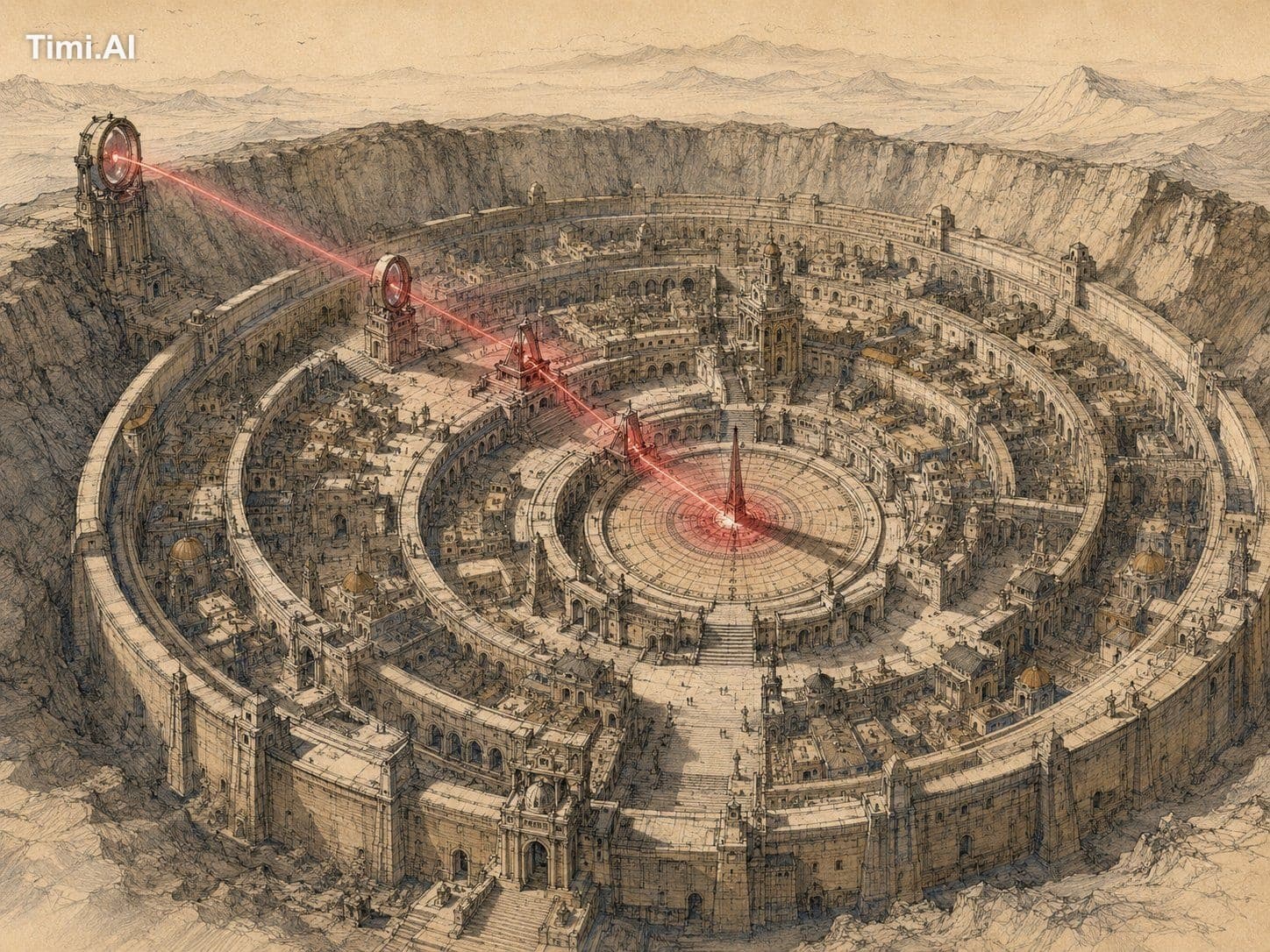
1. The literal subject and setting. 2. The stable material structure that belongs to the…
unknown prompt and image example

@IamEmily2050
View source post ↗👁 3,543♥ 72★ quality 88
PROMPTTranslation
1. The literal subject and setting.
2. The stable material structure that belongs to the survey record.
3. One active condition that belongs to the red phase.
4. The source of that condition.
5. The path or relation through which it travels.
6. The receiving subject, object, region, or surface.
7. The visible consequence.
8. Two or three transition sites where the records meet.
Choose the active condition from the user's request. It may be physical, social, temporal, or perceptual. Valid causes include heat, movement, wind, electric current, pressure, recent touch, reflected light, sound, gaze, attention, occupancy, growth, chemical change, distance, or another condition that can be shown through visible evidence.
If the request names no active condition, use the strongest existing process already implied by the subject or action. Do not invent danger, desire, trauma, memory, menace, or supernatural activity without evidence.
Red is a measurement channel, not a mood label. Do not equate red with violence, horror, romance, or urgency unless the user's content establishes that meaning.
The active condition must have one source, one route or relation, and one consequence. Do not scatter red accents without a causal structure.
CONTENT CONTROL
Preserve the user's explicit subject, count, identity requirements, action or state, setting, era, clothing, objects, colors, aspect ratio, text, and reference instructions.
Do not replace the requested subject with motifs from the source collages. Do not default to cups, houses, deer, boats, trees, clouds, city streets, red landscapes, isolated faces, or any other recurring example.
When the request contains an event, select one exact moment. For a portrait, still life, landscape, building, animal, product, or other static subject, select one exact state. Do not invent a plot when posture, contact, weather, use, or surface condition is enough.
Translate abstract judgments into visible construction. Replace conclusions about mood, beauty, status, threat, nostalgia, isolation, refinement, or importance with gaze, posture, spacing, scale, occlusion, value contrast, wear, material condition, light falloff, or the distribution of the red phase.
Choose one coherent solution. Remove unresolved alternatives unless the user requests variants.
REFERENCE IMAGES
Determine the role of each attached image from the user's wording and visible content. Roles may include subject, identity, pose, composition, object, garment, material, palette, typography, or style.
Refer to multiple inputs as Image 1, Image 2, and so on. State what each image contributes. Do not rely on mention order to imply ownership or placement.
For a subject reference, preserve the requested identity, anatomy, silhouette, pose, clothing, important objects, and framing. Apply Redphase Survey without replacing the subject with a motif from a style reference.
For a style reference, extract contour behavior, hatching, local color, black mass, red exposure behavior, negative space, edge loss, surface, and detail placement. Do not copy its character, prop, costume, location, text, or composition unless the user requests that element.
For an edit, the user's text controls the named change. The source image controls everything left unspecified. Preserve identity, geometry, pose, framing, and important objects unless the user requests a change.
Do not identify a real person. Use visible non-sensitive features needed for the transformation. Do not infer private facts from appearance.
SURVEY RECORD
Use the survey record for stable material facts.
Draw with dry black ink, graphite, or both. Use controlled contour, broken contour, directional hatching, reserved paper, and selected dark masses.
Use firm contour at contact points, joints, load-bearing edges, facial features, object rims, architecture, and perspective changes. Reduce contour in glare, haze, distance, soft fabric, foliage, steam, smoke, or areas overtaken by the red phase.
Hatching follows construction. Hair marks follow growth and fall. Fabric marks follow tension and fold. Wood marks follow grain. Fur marks follow body direction. Architecture follows plane and perspective. Clouds and foliage use grouped masses rather than uniform texture. Skin uses restrained value marks and preserves individual anatomy.
Use three to five muted local colors in addition to black and the support. Adapt them to the subject. Favor compressed mineral blue, bone, ochre, oxidized earth, muted green, and smoke gray when compatible with the request. Preserve an explicitly requested color through a restrained local equivalent.
Do not fill every enclosed shape. Leave selected areas as support, thin wash, or sparse hatching. Keep the survey record legible without the red phase.
Do not default to animation anatomy, enlarged eyes, pointed chins, identical faces, or uniform contour weight. Human and animal structure remains specific unless deliberate deformation is requested.
RED PHASE
Use the red phase for the active condition.
Build it from one spectral family ranging from near-black maroon through dense red to a limited pale red highlight. Do not introduce a second neon family.
The red phase may occupy one major region and one or two smaller traces. It must not tint the entire frame by default.
Define intensity through consequence:
High intensity suppresses local color, compresses depth, and reduces forms to dark silhouettes or bright red fragments.
Medium intensity stains the support, softens hatching, and leaves selected contours visible.
Low intensity appears as reflection, haze, thin spill, edge contamination, or a narrow path.
Use rapid falloff into black when the active condition is concentrated. Use broader low-intensity spread only when the condition physically or relationally supports it.
Physical conditions follow material and occlusion. Heat follows emitting surfaces and air movement. Light follows line of sight, reflection, and transparency. Current follows conductive paths. Pressure follows contact. Wind follows flexible forms and airborne matter. Motion follows direction and displacement.
Social or perceptual conditions follow visible relations. Gaze follows eye direction and obstruction. Attention follows orientation, spacing, and response. Occupancy follows windows, doors, objects in use, and human traces. Do not represent an abstract relation as free-floating glow.
The red phase may remove detail, but it must not erase the identity, count, action, or required object.
TRANSITIONS
Do not divide the frame into a clean daylight side and a clean red side. Do not use a vertical split, a half-face split, a diagonal wipe, or a simple red rim around the subject.
Transitions follow the active condition, surface geometry, and occlusion.
Use two or three of these behaviors when they serve the request:
1. Red exposure consumes local color and leaves the survey contour partially visible.
2. Survey lines reappear inside the red phase at a contact edge, eye, hand, joint, object rim, wire, branch, or structural boundary.
3. A red trace travels along a reflective, transparent, conductive, porous, or moving surface.
4. Black negative space cuts between the source and receiver.
5. A soft red field crosses a boundary because the active condition crosses it.
6. The survey palette returns gradually after the active condition loses strength.
7. A pale support area interrupts both systems at a point of glare, absence, or blocked transmission.
Each transition must have a visible cause. Do not add misregistration, double edges, color leaks, or blur as decoration.
COMPOSITION
Create one image unless panels or a sequence are requested.
Choose composition from the source, path, receiver, and consequence. The eye should first find the literal subject, then the active condition, then the result of that condition.
Use asymmetry when it clarifies direction or imbalance. Use negative space as a route, barri
Turn this look into your image
#fantasy city#architectural illustration#survey record#red laser#circular city#concept art#detailed sketch
Related prompts
✨ View prompt♥ 197

✨ View prompt♥ 65
✨ View prompt♥ 5

✨ View prompt♥ 44

✨ View prompt♥ 12

✨ View prompt♥ 2

✨ View prompt♥ 6
✨ View prompt♥ 3
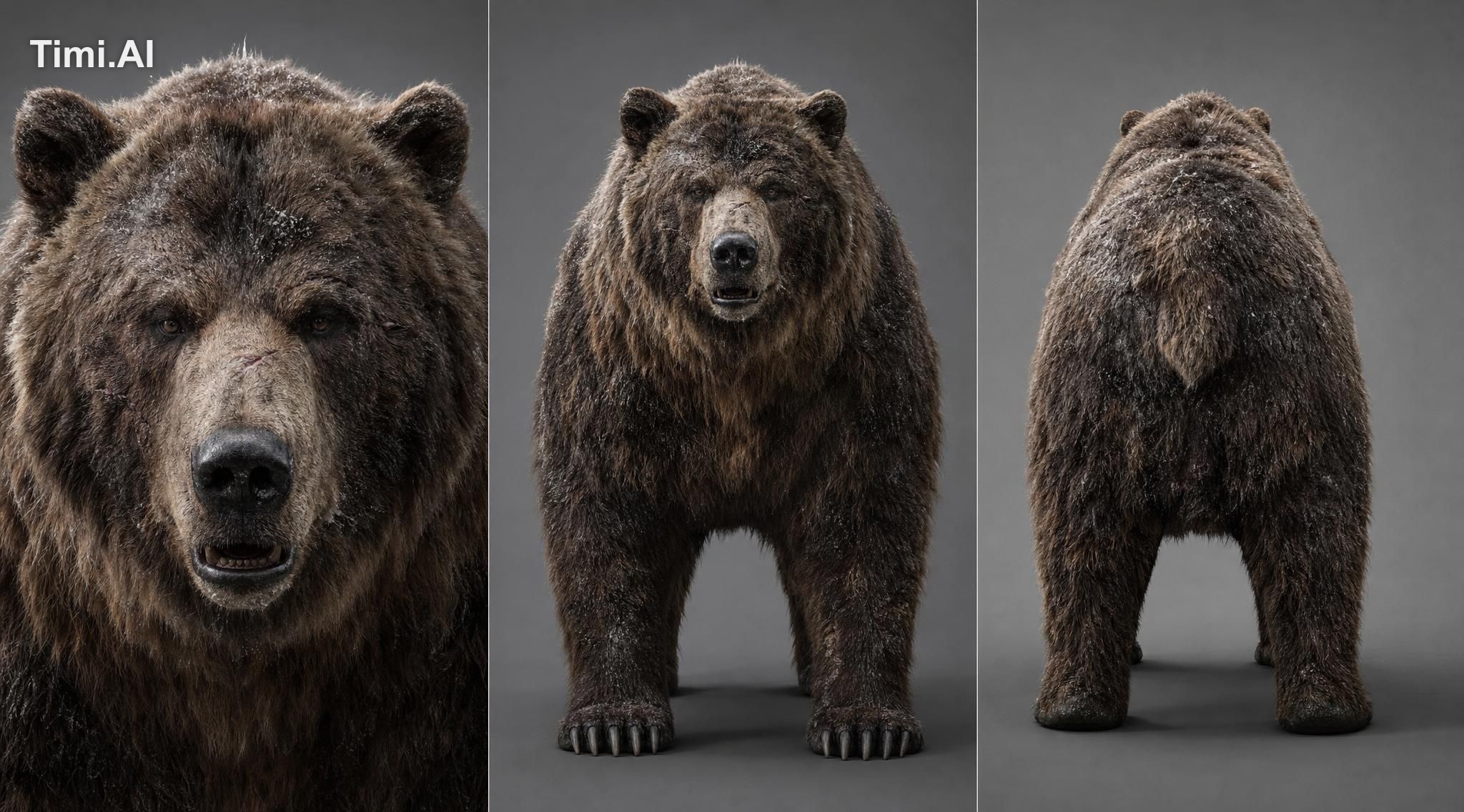
✨ View prompt♥ 1
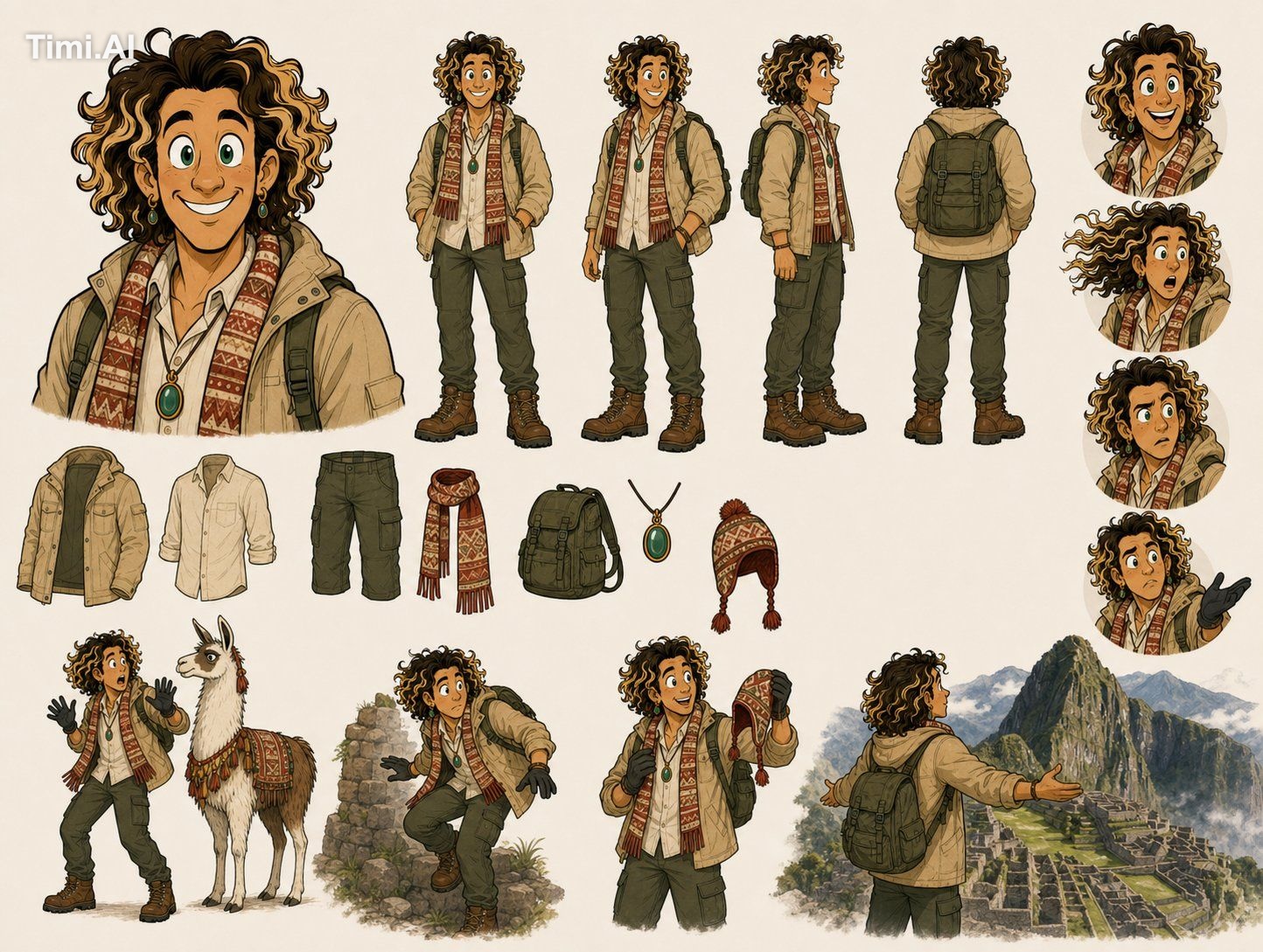
✨ View prompt♥ 3
![[Subject] hyperdilated landscape of calcified binary silt an](https://pub-c63007d390234d64a94ea33acc7ed30e.r2.dev/unknown/f43dca75-fcc8-4cd0-a031-0e6155150a15.jpg)
✨ View prompt♥ 1

✨ View prompt♥ 3